
Late each summer, a cluster of tracks barely two inches wide fans across the sand toward the water, the only sign a nest emptied overnight. Sea turtles hatching along Pensacola Beach is one of the Gulf Coast’s quiet marvels, and guests at Portofino Island Resort stay on a stretch of Santa Rosa Island where it happens.
Guests in our Pensacola Beach condo rentals look out over protected nesting sand for half the year, and a few choices after dark decide how many hatchlings reach the water.
When Do Sea Turtles Hatch in Florida?
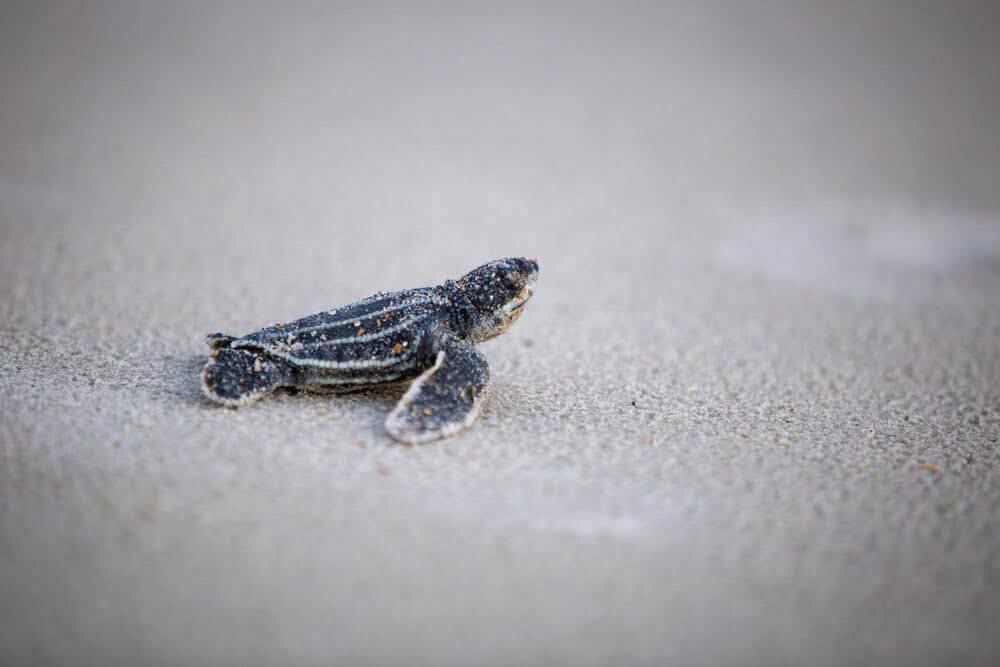
Sea turtle season runs from May through the end of October. Escambia County Sea Turtle Conservation Program volunteers walk the sand at first light for the state’s Statewide Nesting Beach Survey, and the neighboring Gulf Islands National Seashore is monitored too. Incubation takes roughly two months: the earliest nests hatch in July, August is busiest, and a few hatch as late as October.
You will find sea turtles hatching only after dark, once the sand cools, and every nest is marked with a sign and stakes, so a morning walk from our Pensacola Beach resort may take you past one.
Which Sea Turtles Can You Find Hatching in the Area?
The sea turtles hatching on this island belong to four of Florida’s five species, though loggerheads account for more than 90 percent of nests here. Every Florida sea turtle species is threatened or endangered:
-
Loggerhead: broad-headed and heavy-shelled, nesting April through September.
-
Green: the only herbivore among sea turtles, grazing seagrass and algae.
-
Kemp’s ridley: the smallest sea turtle in the world, critically endangered.
-
Leatherback: the largest turtle on earth, unchanged since the age of the dinosaurs.
How to Help Sea Turtles Reach the Gulf
After hatching, baby sea turtles steer toward the brightest horizon, which should be moonlight on water. Artificial light pulls it inland instead: county monitors found that lighting affected 65 percent of nests here in a recent season. Only one in 1,000 reaches adulthood, so guidance from the Santa Rosa Island Authority and the FWC’s advice for beachgoers are worth following:
-
Carry A Red Flashlight: Avoid using your phone’s light or a regular flashlight on night walks.
-
Watch From A Distance: Stay 50 feet back and never touch a hatchling.
-
Clear The Sand At Night: Fill in holes and take chairs and toys with you.
-
Report A Nest or Injured Turtle: Call the local patrol at 850-281-5904, or FWC’s Wildlife Alert Hotline at 888-404-FWCC (3922).